Generic advice
Standard tips may miss your flight times, usual sleep schedule and biological time of light exposure.
Fuseo
A chronobiology engine that considers your sleep, flights and light exposure to build a plan tailored to your trip.
Standard tips may miss your flight times, usual sleep schedule and biological time of light exposure.
The engine connects your itinerary, body clock and light windows to propose a personal plan.
What happens between the moment you enter your flights and the moment your plan appears.
time step of the body clock calculation
scenarios simulated for a single plan
clock points calculated per trip
automated tests for every engine release
Models published in peer-reviewed journals, rewritten and assembled by our team. No unverifiable “home-made” formula.
A mathematical oscillator that reproduces the brain's central clock and its response to light, developed at Harvard by Kronauer, Jewett and Forger. It is the heart of the calculation: it tells, at every moment, what time it is “for your body”.
Forger, Jewett & Kronauer, J Biol Rhythms, 1999
The same light advances the clock after your lowest body-temperature point and delays it before. The engine accounts for biological time, intensity (outdoors, lamp, cabin) and duration of exposure.
Khalsa 2003 · Zeitzer 2000 · St Hilaire 2012 · Chang 2012
The two-process model: sleep pressure that builds while awake, and the circadian rhythm that modulates it. It predicts your energy slumps and schedules naps and caffeine.
Borbély 1982 · Daan, Beersma & Borbély 1984
Two effects calculated separately: resetting the clock and helping you fall asleep. Offered only when useful, at a low dose, and after a safety questionnaire.
Lewy 1998 · Burgess 2008, 2010
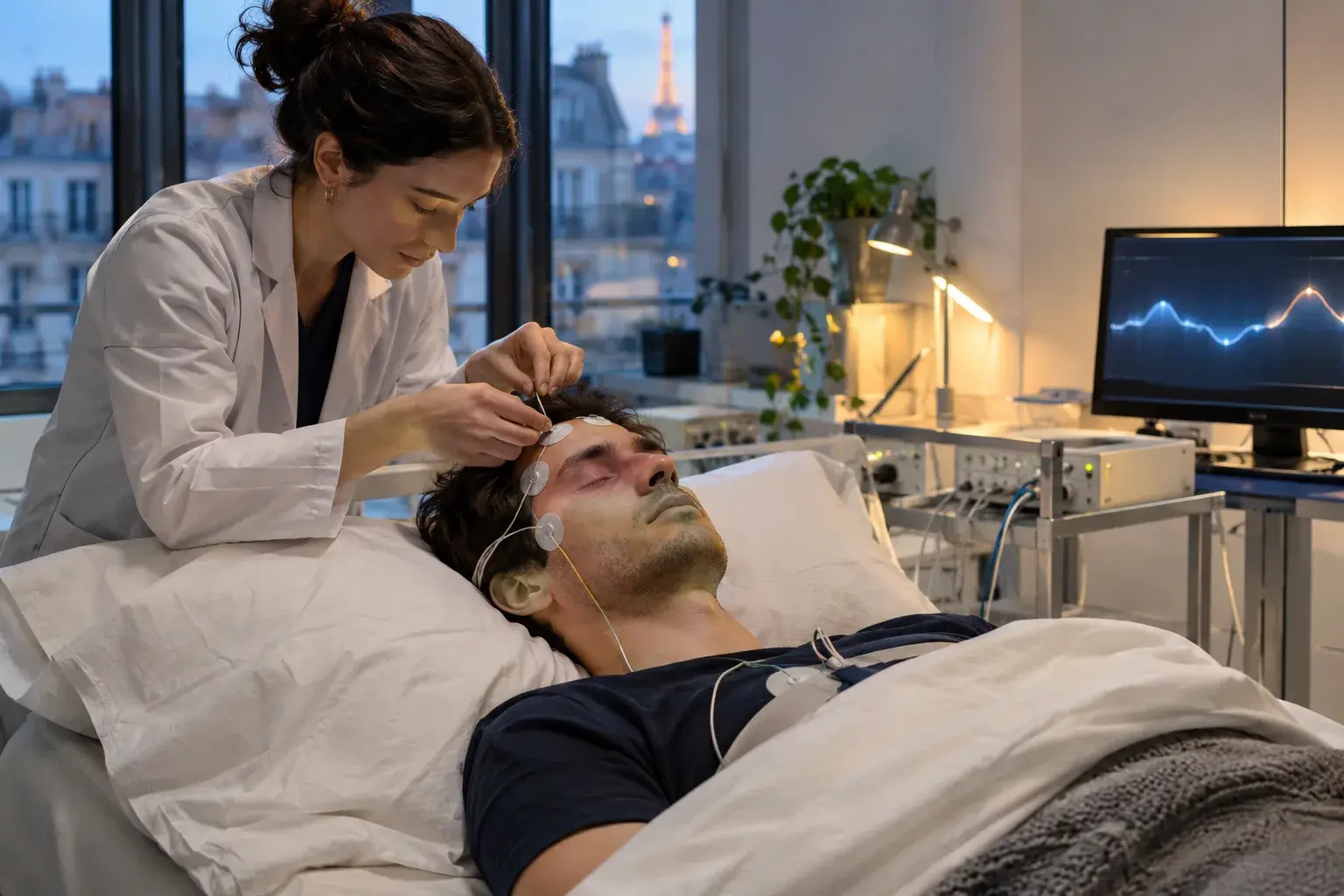
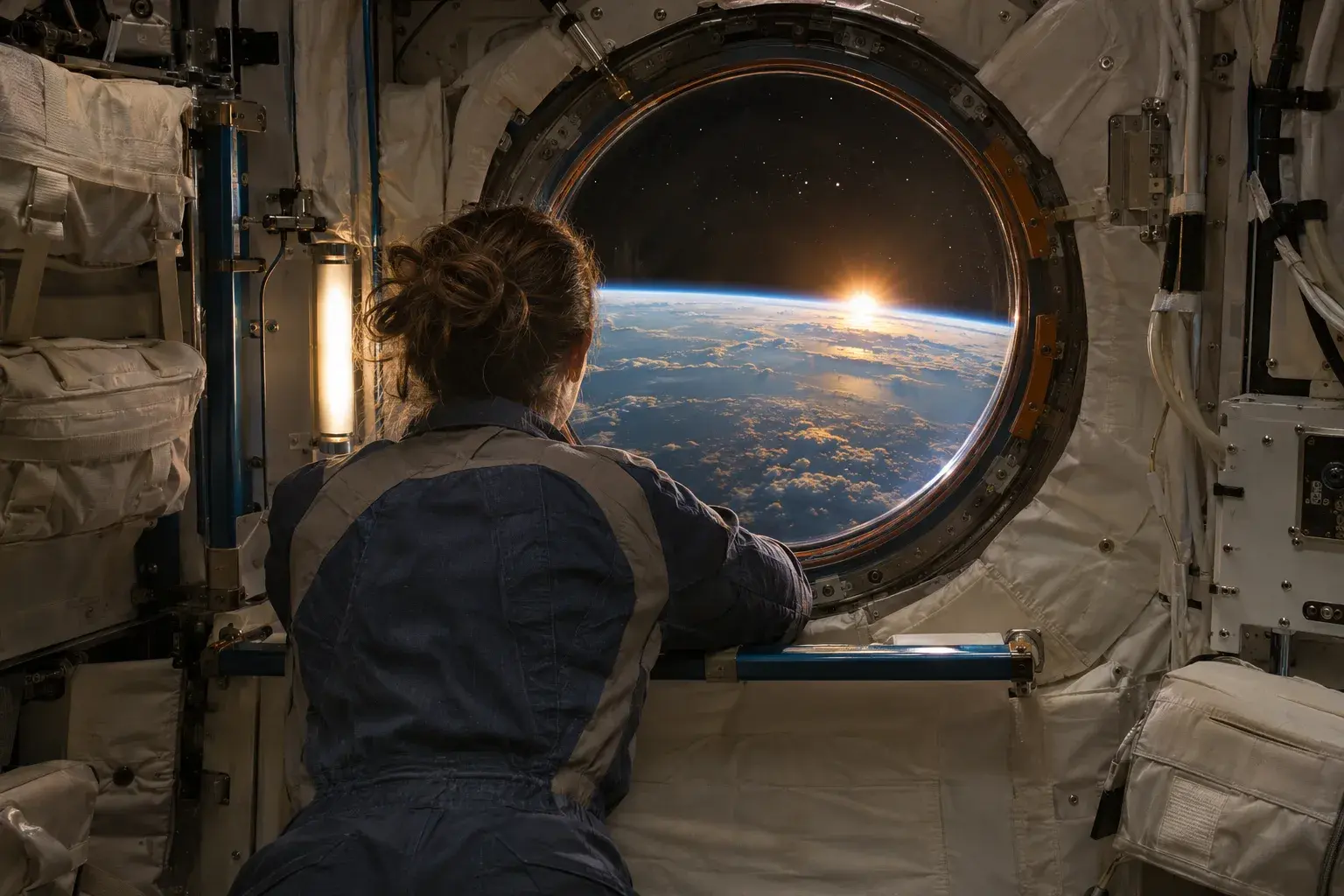
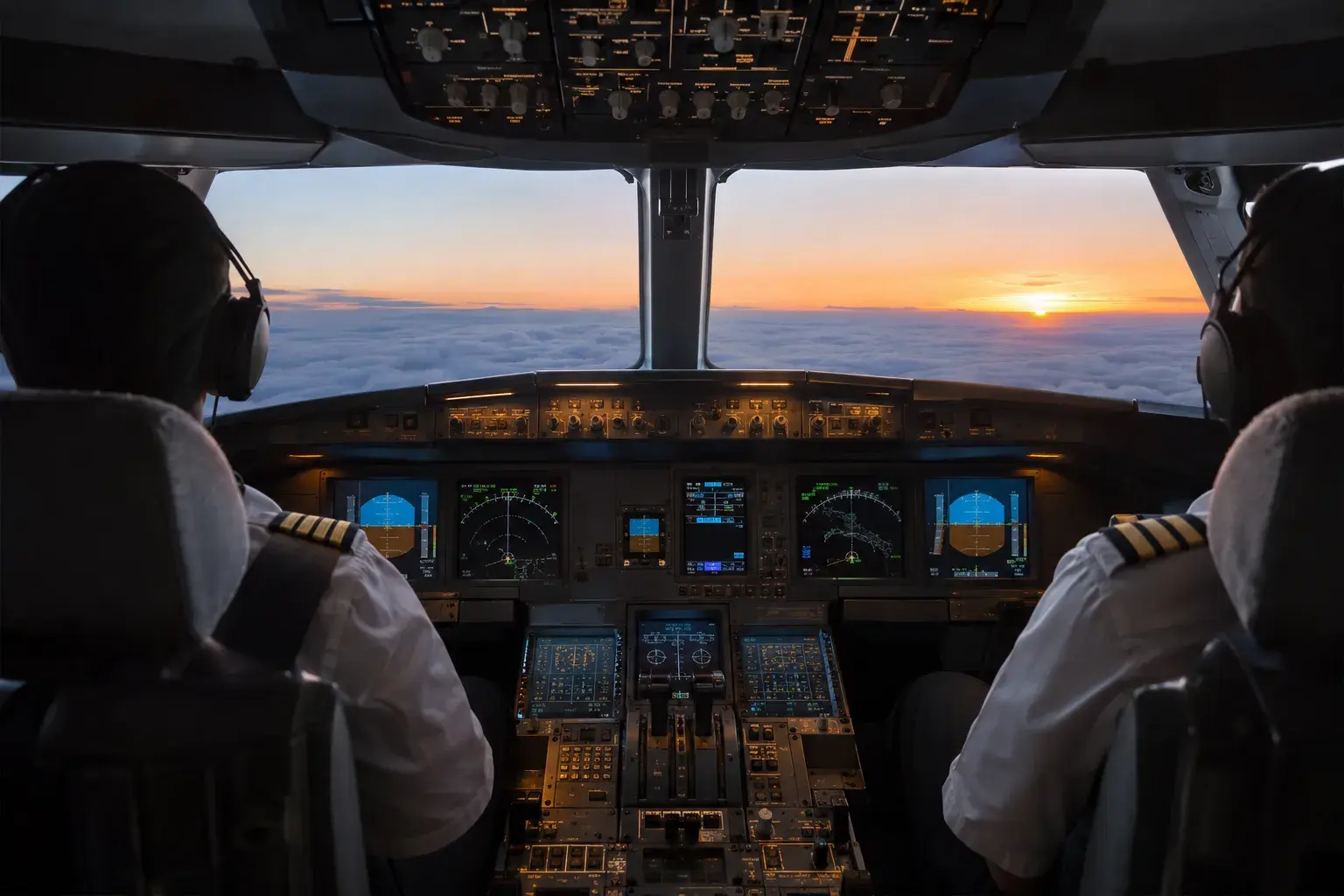
These models were not invented for a travel app. They come from research on the fatigue of people who work against the clock: astronauts, aircrews, night workers.
For example, simulation software based on Kronauer's clock model was used to estimate the body clock of 21 astronauts during long-duration missions aboard the International Space Station. The two-process sleep model underpins the biomathematical fatigue models used to assess aircrew schedules in aviation.
Fuseo applies these same principles to your trip, under the supervision of a sleep physician who is also an aerospace medicine physician.
Fuseo is not a fatigue-management tool for on-duty aircrew, nor a medical device.
These situations show how a plan that considers sleep, light and schedules can help you prepare for arrival.
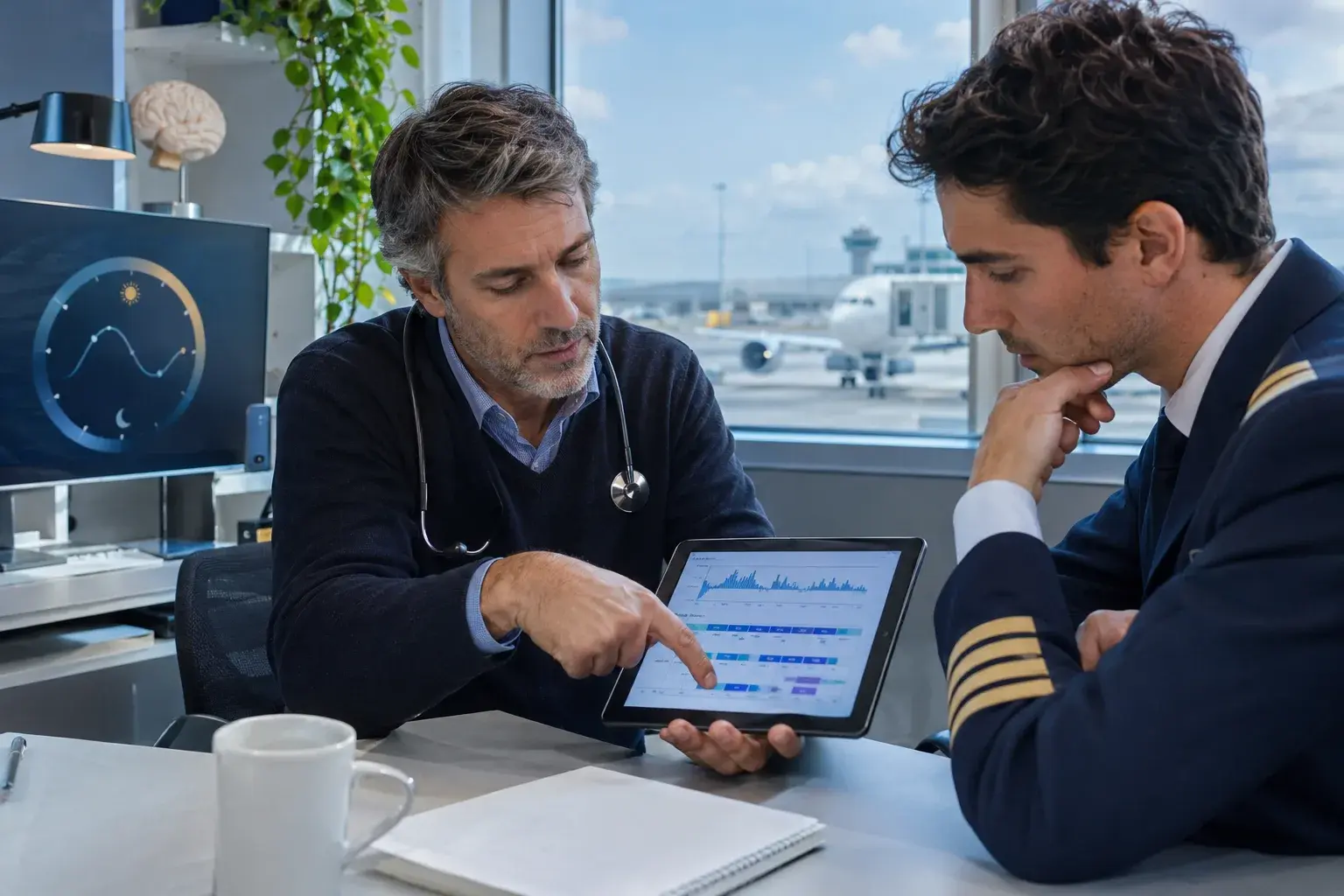
The models, their parameters, the safety rules and the way advice is presented to you have been reviewed and validated by Fuseo's scientific committee, which brings together a sleep physician and an engineer-researcher in sleep technologies.
Before every release, the engine is automatically tested on real trips and difficult cases.
Paris ⇄ New York, Tokyo, Los Angeles and Sydney, both ways, with or without connections.
Clock changes (hours that do not exist or happen twice), the date line, arriving “the day before”.
No light is ever advised at a time when it would worsen the time difference: this is checked against the simulation, over the full 24-hour cycle.
No “go out in the sun” mid-flight or at night, no nap during a connection, no sleep during your appointment.
Stays of 24 h, 48 h or a week, immediate return, early birds or night owls, short and long sleepers.
Delayed flight, missed light, short night: the plan is recalculated from what actually happened.
Your body clock is estimated from your answers, without blood tests or sensors: the uncertainty is about one hour, and we show it. Alertness scores are relative predictions, not a medical measurement or fitness to drive. Fuseo provides general information on travel chronobiology and does not replace the advice of a healthcare professional.
Fuseo calculates your sleep, light and caffeine times from your flights.